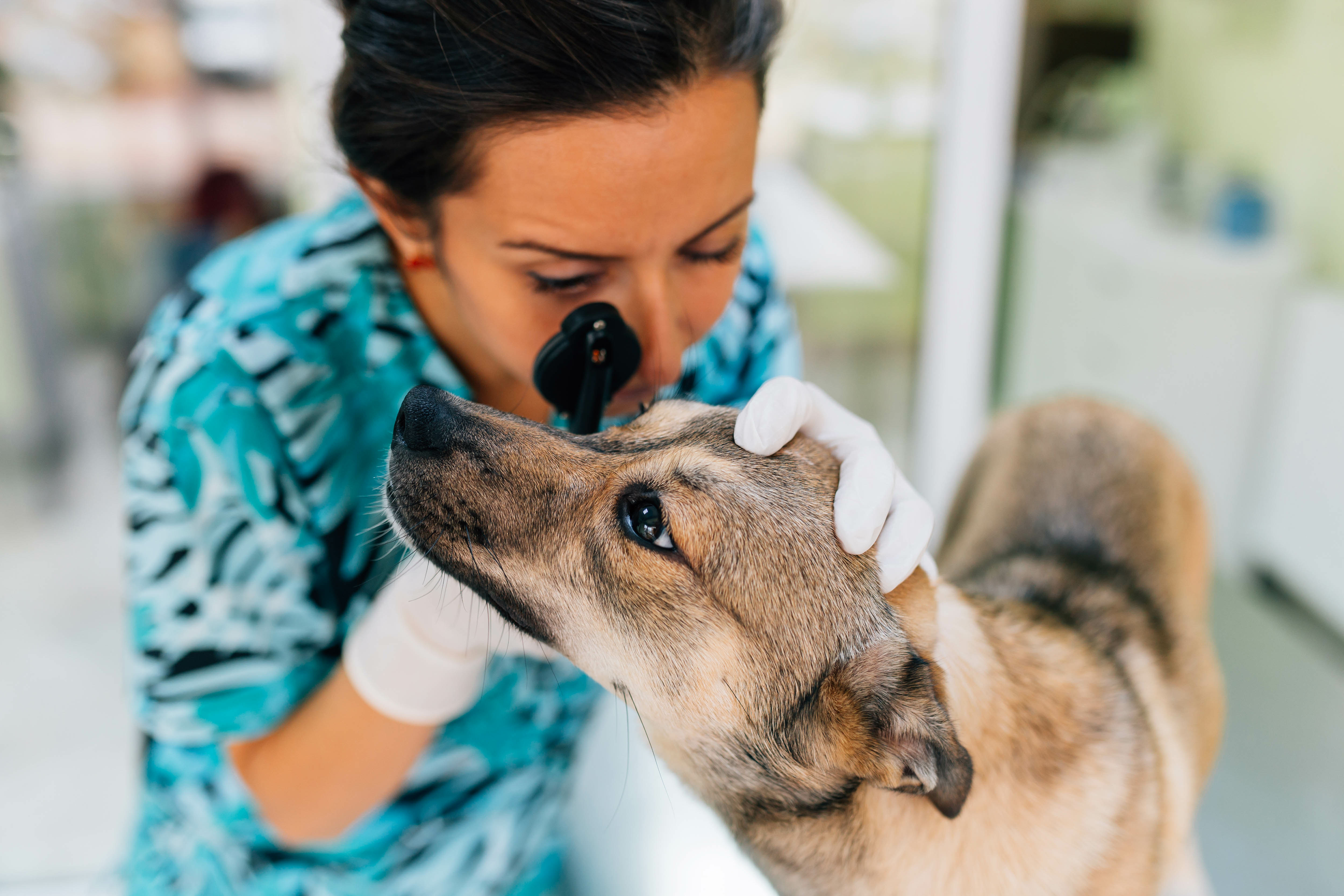
Scar Prevention in Dogs and Cats: What Happens in the First Three Weeks
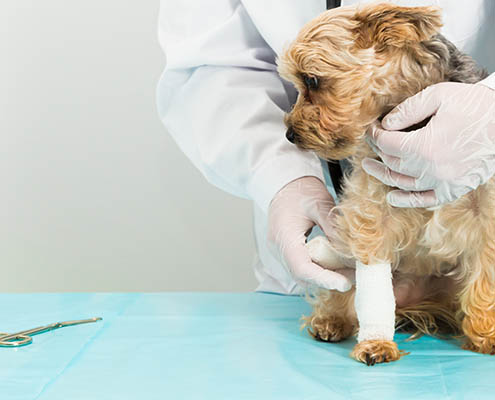
A client returns for a two-week post-op recheck after a routine mass removal on their dog’s flank. The incision is clean, the dog is comfortable, and healing is progressing normally. Then the client asks the question you’ll hear again and again: “Is the scar going to look like this forever?”
The honest answer is more nuanced than most vets have time to explain in a recheck appointment. Scar formation is a biological process that begins in the first hours after wound closure and is largely determined within the first three weeks — long before the scar is visible enough for an owner to judge. By the time a client notices a raised, thickened, or discolored scar at week six, the biology that created it is already finished.
That window — the acute inflammatory phase — is where intervention matters. And it’s where amniotic membrane powder changes what’s clinically possible.
Why Wounds Scar: The Three-Week Window That Matters
Normal wound healing proceeds in three overlapping phases: inflammation, proliferation, and remodeling. Scar tissue is the product of what happens in the transition between inflammation and proliferation — specifically, how well the wound resolves its inflammatory state before fibroblasts begin depositing collagen.
The key driver is TGF-β (transforming growth factor beta). Released by platelets and inflammatory cells immediately after injury, TGF-β recruits fibroblasts to the wound and signals them to produce collagen. This is necessary for wound closure. The problem arises when TGF-β signaling persists too long or is too intense — fibroblasts overproduce collagen, depositing it in disorganized bundles rather than the aligned architecture of normal dermis. The result is scar tissue.
Critically, research has shown that TGF-β suppression works at the transcriptional level — amniotic membrane downregulates the gene expression of TGF-β2, TGF-β3, and all three TGF-β receptor types in fibroblasts. This isn’t a surface-level effect. It’s an upstream interruption of the signaling cascade that determines whether a wound heals cleanly or scars.
The window for this intervention is weeks one through three. After that, the collagen framework is laid and the remodeling phase determines final scar quality — a slower, less modifiable process. Scars typically appear most pronounced at three to eight weeks post-closure and reach final form at six to twelve months. What they look like at week six was determined biologically in week two.
Can You Actually Prevent Scarring in Post-Surgical Wounds?
The short answer is: not completely, but meaningfully — if the intervention targets the right mechanism at the right time.
Standard post-op care focuses on infection prevention, moisture management, and keeping the patient from disrupting the wound. These are essential. But none of them address the inflammatory signaling driving fibrosis. Suturing technique affects scar width and tension. Infection increases inflammatory load. But the underlying TGF-β cascade runs regardless of how clean the incision is or how well the edges are apposed.
Amniotic membrane works through a distinct pathway. It modulates the macrophage response — shifting the population away from the pro-inflammatory M1 phenotype that amplifies TGF-β signaling, toward the pro-resolving M2 phenotype that supports organized tissue remodeling. This shift matters because macrophage polarization in the first one to two weeks is one of the strongest predictors of scar outcome in healing wounds.
A 2025 study published in Scientific Reports evaluated lyophilized (powdered) amniotic membrane on full-thickness skin wounds in dogs and found efficacy comparable to fresh membrane — validating that the decellularization and powdering process preserves the biologically active components responsible for healing modulation. Studies on canine amniotic-derived products have consistently demonstrated benefits in both in vitro models and in vivo wound healing, with outcomes including accelerated epithelialization and reduced inflammatory burden.
The practical implication: applying amniotic membrane powder during the acute phase — at closure and at early rechecks — gives the wound biology a better trajectory before the collagen deposition phase begins.
Why Cosmetic Outcomes Matter More Than Vets Often Assume
Post-surgical scar appearance is not a vanity concern — it’s a measurable driver of client satisfaction and practice loyalty. A study published in Veterinary Evidence found that cosmetic outcome as judged by the owner accounted for 37% of the variability in overall satisfaction with surgical procedures in dogs. That number is significant: roughly one in three points of client satisfaction after surgery is determined by how the wound looks, not how quickly the patient recovered or how well the procedure went.
There is also documented discordance between how veterinarians and owners assess incision appearance. Vets evaluate healing on clinical criteria — no dehiscence, no infection, appropriate healing progression. Owners evaluate on cosmetic criteria — hair regrowth, scar size, color, texture. These are different standards, and vets who address only the clinical criteria miss the metric that determines whether a client returns.
This matters particularly for procedures in cosmetically visible locations: facial mass removals, limb surgeries, flank incisions on short-coated breeds, and any procedure where hair regrowth may be incomplete. For breeders, show animals, or clients who simply place high value on appearance, the post-surgical cosmetic outcome is often the lasting impression of the entire clinical experience.
Adding Scar Prevention to Your Post-Op Protocol with Healion
Healion delivers decellularized amniotic membrane in a powder format via a sterile bellow dispenser — a practical design for post-surgical wound application where liquid or sheet formats would require more handling or risk of contamination.
The protocol addition is straightforward:
- At closure — apply Healion to the wound bed before subcuticular or skin closure in cases where scar risk is elevated (cosmetically sensitive location, large wound surface area, high-tension closure, or breed predisposition to scarring)
- Early post-op rechecks (days 3–7) — apply to the incision line if any wound edge separation, inflammation, or slow re-epithelialization is noted
- Acute lacerations and traumatic wounds — apply after debridement to contaminated wounds where scar formation is expected given the wound mechanism
Healion modulates inflammation, enhances healing, and reduces scar tissue formation — beginning at the cellular level in the first week before scar architecture is established. The bellow dispenser allows precise, hands-off application directly to the wound surface without the mixing or handling challenges of liquid biologics.
Setting Client Expectations After Application
When you add Healion to a post-surgical protocol, give clients a clear timeline: “The wound will still go through a visible healing phase over the next several weeks. What we’re doing now is giving the tissue the best biological environment to heal with less scar formation. You’ll be able to judge the final result at about six months.” That framing manages expectations while communicating that you took a proactive step most practices don’t offer.
Clinical Bottom Line
Scar formation is determined in the first three weeks of healing — not at the six-week recheck when clients first comment on appearance. The biology is settled before the scar is visible. Intervening during the acute inflammatory phase, when TGF-β signaling and macrophage polarization are still modifiable, is the only window for meaningful scar prevention.
Healion brings an evidence-supported mechanism to that window: amniotic membrane matrix that suppresses fibrotic signaling, modulates inflammation toward resolution, and supports organized tissue remodeling from the first application. For surgical practices where client satisfaction matters — and where cosmetic outcome accounts for more of that satisfaction than most vets realize — it’s a meaningful addition to the post-op toolkit.
Explore Healion’s clinical profile and request a sample at RethinkHealing.com.